
The 2025 edition of China's premier toy, baby product, and licensing mega-fair concluded in Shanghai, painting a vibrant picture of an industry at a pivotal crossroads. Co-hosted by the China Toy & Juvenile Products Association (CTJPA), the four concurrent exhibitions—CTE Toy & Play, CLE Licensing Expo, CKE Kids & Baby Expo, and CPE Preschool Education Expo—drew a record 2,629 exhibitors from 41 countries and regions, showcasing over 5,426 brands.
Beyond the scale, the fair delivered two definitive signals: the rise of emotionally intelligent AI toys as a dominant trend and the accelerated shift of Chinese manufacturing clusters from contract production to global brand building.
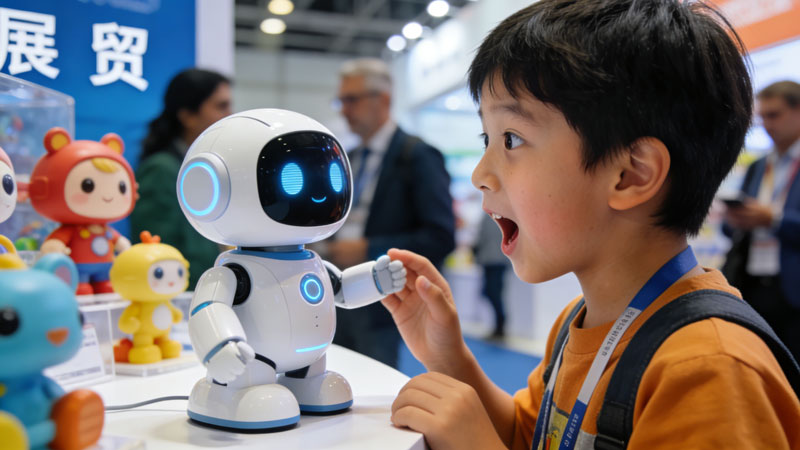
AI Reimagines Play: From Simple Interaction to Emotional Connection
The most talked-about trend on the show floor was the evolution of smart toys. Moving beyond basic voice commands, this year's highlight was on AI toys equipped with emotional computing and large language models, designed to offer companionship and adaptive learning.
Industry reports suggest this is more than a niche. The global AI toy market, valued at approximately $18.1 billion in 2024, is projected to grow to around $60 billion by 2033, driven by demand across all age groups—from educational tools for children to emotional companions for adults. This aligns with surging consumer interest in China, where leading e-commerce platforms reported AI toy sales multiplying severalfold over the past year.
"The integration of AI isn't just adding a feature; it's creating a new product category that offers emotional value and sustained engagement," explained an executive from an AI toy startup, highlighting the sector's move towards higher-value "hardware plus service" models.
From Factory Floors to Global Brands: The "Cluster" Advantage
The fair underscored a structural transformation within China's toy industry. Exhibitors specializing in export saw a dramatic surge, with numbers increasing by 50% in the toy sector and 46% in baby products compared to previous years. This growth was spearheaded not by isolated companies, but by collective delegations from over 30 key manufacturing clusters across China, such as Chenghai, Dongguan, Yunhe, and Ningbo.
These clusters are leveraging their deep, collaborative manufacturing ecosystems to pivot from original equipment manufacturing (OEM) to establishing their own branded presence internationally. A case in point is the Yunhe wooden toy cluster. Once known primarily as the "world's factory" for wooden toys, it is now investing in "smart manufacturing," independent design, and direct cross-border e-commerce channels to promote homegrown brands like "Mimi Smart Play" in over 50 countries.
"The fair serves as the premier launch window for our collective upgrade. It allows us to move beyond just taking orders and instead, showcase our innovation and brand stories directly to global buyers," shared a representative from a Guangdong-based toy conglomerate.
The Dual Engine: Technology and Cultural Narratives
The path to global branding is powered by a dual engine. On one side is technological sophistication, as seen in AI toys and smart nursery products. On the other is the power of cultural narrative through Intellectual Property (IP).
Chinese companies are increasingly driving overseas growth with original IPs. Bubble Mart's global success with LABUBU is a benchmark, with its overseas revenue experiencing explosive growth, particularly in markets like the Americas and Europe. Other brands like 52TOYS and Top Toy are following suit, introducing their own IP characters at major international festivals and pop-up stores from Tokyo to Thailand.
This "brands going global" strategy relies on deep localization—adapting marketing, collaborating with local influencers, and sometimes even establishing regional production—to resonate with consumers culturally. The industry consensus is clear: the future lies not in selling anonymous products, but in exporting compelling brand experiences.
Conclusion: A New Chapter for "Made in China"
The 2025 CTJPA Four-Expo Event has closed, but its message resonates loudly. The Chinese toy and juvenile products industry is rapidly transitioning from a manufacturing powerhouse to a source of global innovation and beloved brands. By fusing cutting-edge technology with creative storytelling and leveraging the robust synergy of its industrial clusters, the sector is successfully authoring a new, more ambitious chapter in the story of "Made in China." The world is not just buying from China; it is increasingly engaging with the brands and innovative play concepts born there.
Post time: Jan-08-2026


