
In the workshops of Shantou's Chenghai district, long known as the "Toy and Gift Capital of China," a quiet revolution is underway. The whir of plastic injection molding machines is now accompanied by the hum of servers and the soft, conversational voices of interactive robots. This traditional manufacturing powerhouse, which produces nearly 33% of the world's plastic toys, is leveraging artificial intelligence and large language models to pivot from being the "world's factory" to becoming a global benchmark for intelligent creation.
The transformation is systematic and backed by powerful alliances. In June 2025, the district government partnered with tech giant Baidu Smart Cloud to host an
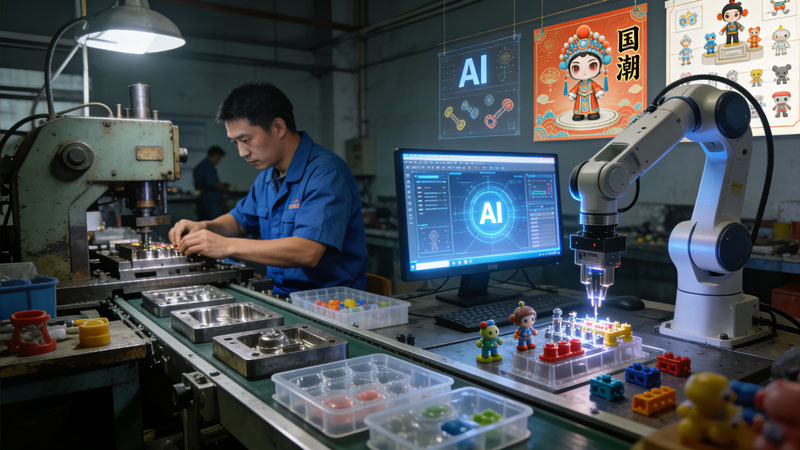
AI Toy Industry Innovation and Development Conference, uniting global AI vendors, IP creators, and manufacturers with the theme "Cluster Gathering Momentum, AI Breaking Boundaries". This was swiftly followed in July by a strategic cooperation agreement with another AI leader, SenseTime, to jointly build the nation's first "AI+Toy" industrial base. These moves are core to Chenghai's strategy of integrating "AI + Guochao" (China-Chic), using technology to power a new wave of culturally infused smart toys.
From Assembly Lines to AI Engines: The Core of the Transformation
The shift goes far beyond simply putting a speech chip inside a doll. Companies in Chenghai are utilizing large AI models to create toys with emotional intelligence and advanced cognitive functions. For instance, Baidu Smart Cloud provides a dual "brain" system: one for logical tasks like tutoring and problem-solving, and another, based on affective computing, for emotional recognition and companion-style interaction.
Local manufacturer Shifeng Culture has launched products like the "AI Magic Star," which can upgrade any plush toy into a smart device, and the "AI Feifei Rabbit," which can perceive a child's mood and offer comfort or share in joy. Another company, Weili Intelligent Technology, has developed a remote-control car powered by a large model, capable of functions like baby monitoring and home security. This technological leap is directly impacting the bottom line. Following the integration of large models, one toy company executive reported dramatically faster R&D and time-to-market cycles, with orders for their AI toys soaring and production schedules filled through March 2026.
Intelligent Manufacturing: The Invisible Backbone
The revolution is equally profound on the factory floor. Leading the charge in smart manufacturing is Shantou Gaodesi Precision Technology, a "lights-out factory" where AI optimizes everything from design to packaging. In design, an AI-assisted system generates preliminary brick assembly models based on a designer's input, boosting efficiency. On the production line, IoT sensors and self-developed AI-powered sorting systems automate the precise packaging of countless tiny brick pieces, a task once prone to error. This digital transformation is widespread, with 182 above designated size toy enterprises in Chenghai having completed digital upgrades by the first quarter of 2025.
Culture Meets Code: The "AI + Guochao" Advantage
Chenghai's strategy uniquely blends cutting-edge technology with cultural storytelling. This "AI + Guochao" fusion aims to create distinctive products with global appeal. A prime example is Qunyu Technology's development of "Yingge Dance Robots." This project uses cloud sharing of movement data to transform toys into dynamic carriers of intangible cultural heritage, allowing traditional Chinese folk dances to be performed by robots worldwide. This approach aligns with broader policy goals to encourage original IP and integrate diverse cultural elements, from city images to museum collections, into AI toy creation.
Navigating Challenges on the Path to a 100-Billion-Yuan Future
The ambition is clear: to forge a thousand-billion-yuan toy creative industry cluster. Provincial estimates suggest the "AI+" transformation could unlock over 100 billion yuan in incremental value for Guangdong's toy industry. The progress is tangible, with AI toy exports from Chenghai's major enterprises rising from under 10% to around 30% of their export mix.
However, the path forward has hurdles. The industry faces a reliance on external tech partners, a shortage of interdisciplinary talent, and consumer concerns regarding data security and privacy. In response, authorities are focusing on building public service platforms, establishing industry standards, and fostering a deeper innovation ecosystem where toy makers and AI companies collaborate seamlessly.
The story unfolding in Chenghai is a microcosm of the broader upgrade of "Made in China." By harnessing AI, intelligent manufacturing, and cultural innovation, this traditional toy capital is not just surviving the future but actively building it, one smart, emotionally aware robot at a time.
Post time: Jan-08-2026


